RETURN_TO_REGISTRY
Oil & Gas Distributed Well ESD System
UPDATED
Oil & GasDistributed ESD SystemRockwell ControlLogixMicro850Red Lion HMIEmerson FBxEdgeIgnitionSparkplugBModbus4-20mA InstrumentationWellhead AutomationSCADA Integration
Project Overview
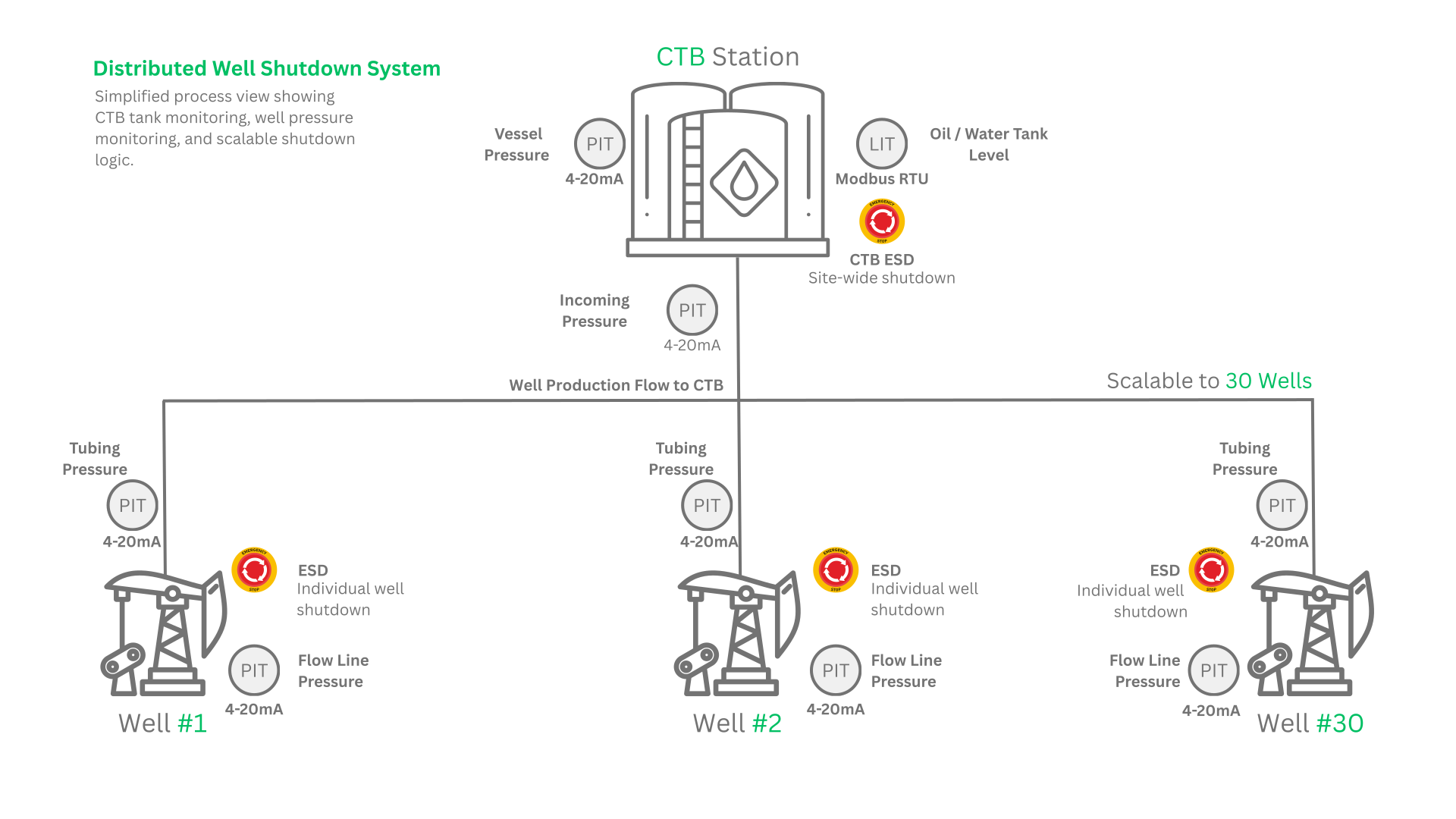
This project was a distributed well shutdown system designed for oilfield sites with multiple wells connected to a central CTB station.
The main purpose of the system was to monitor CTB tank conditions and individual well pressure conditions, then trigger the correct shutdown response depending on where the abnormal condition occurred.
At the CTB, the system monitored oil/water tank level, vessel pressure, and incoming pressure. At each well, the system monitored two main pressure points: flow line pressure and tubing pressure. The CTB also included a site-wide ESD pushbutton, while each well had a local ESD for individual well shutdown.
The control logic was intentionally straightforward. The larger engineering challenge was building a system architecture that could be replicated across multiple sites, support different well counts, and allow well names, IP addresses, and active wells to be configured per deployment.
 Process Concept
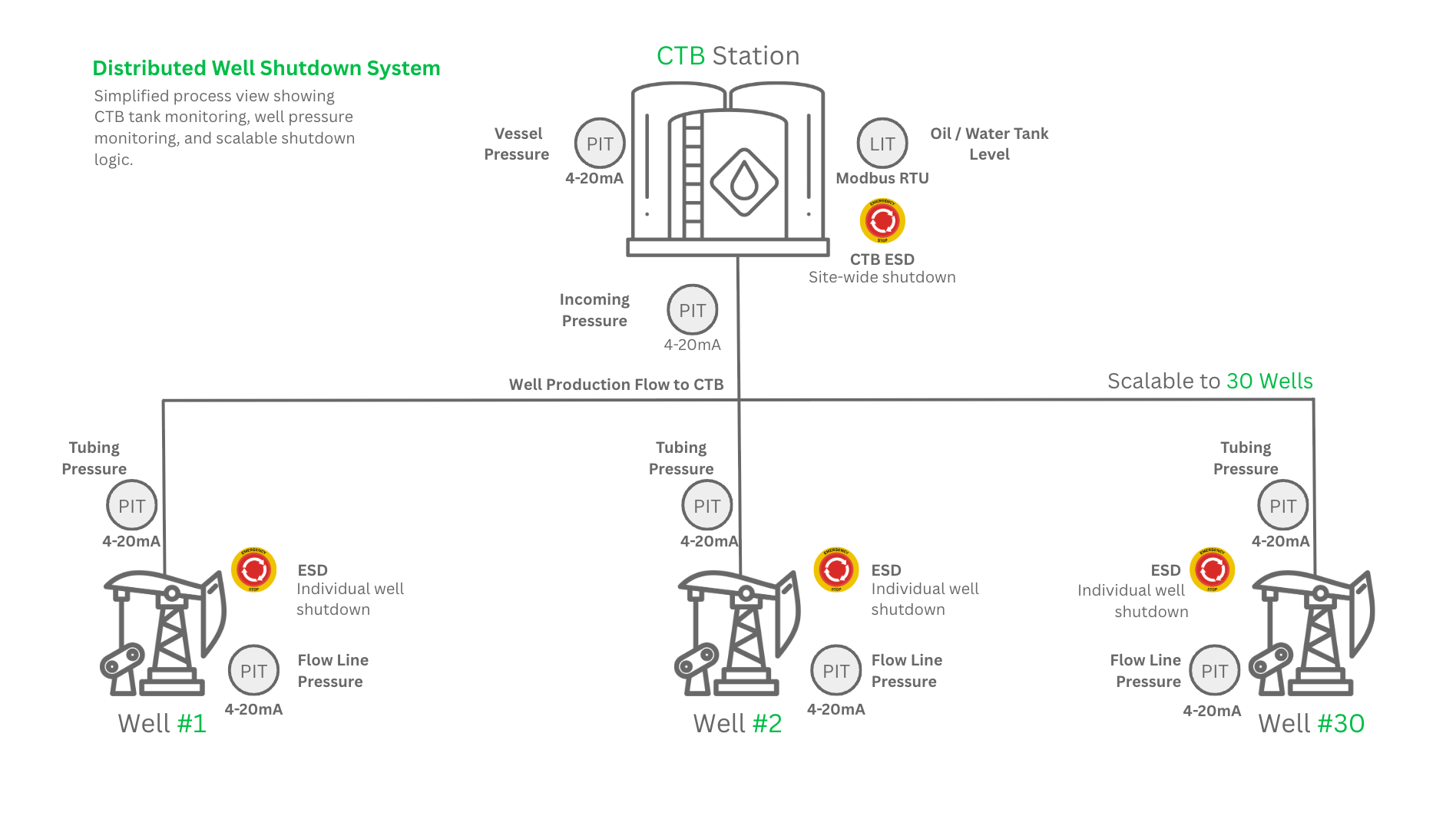
The CTB station acts as the central point for site-level monitoring and shutdown coordination. Tank level information is collected from the oil/water tank level system using Modbus RTU, while pressure signals are collected through 4–20 mA instrumentation.
Each well includes local pressure monitoring for flow line pressure and tubing pressure. These signals are used for individual well protection. If a well pressure condition reaches a shutdown limit, that well can be shut down independently without necessarily shutting down the entire site.
The CTB ESD and tank high-level conditions provide site-wide shutdown protection. When these conditions occur, the main controller sends shutdown commands to the enabled wells.
This separation was important because not every abnormal condition requires the same response. Some conditions are local to one well, while others require shutting down all wells connected to the CTB.
Control Architecture
The system used a central PLC at the CTB panel and remote controllers at the wells. The CTB panel included the main Rockwell controller, a Red Lion HMI for local operation, and an Emerson FBxEdge device for SCADA data integration.
Each well used a Rockwell Micro850 controller to monitor local pressure signals and handle local shutdown logic. Depending on the site layout and distance, communication between the CTB and the well controllers could be implemented through wireless or hardwired communication.
The Emerson FBxEdge device was used to collect operational data and publish it to the company SCADA system in Ignition using SparkplugB.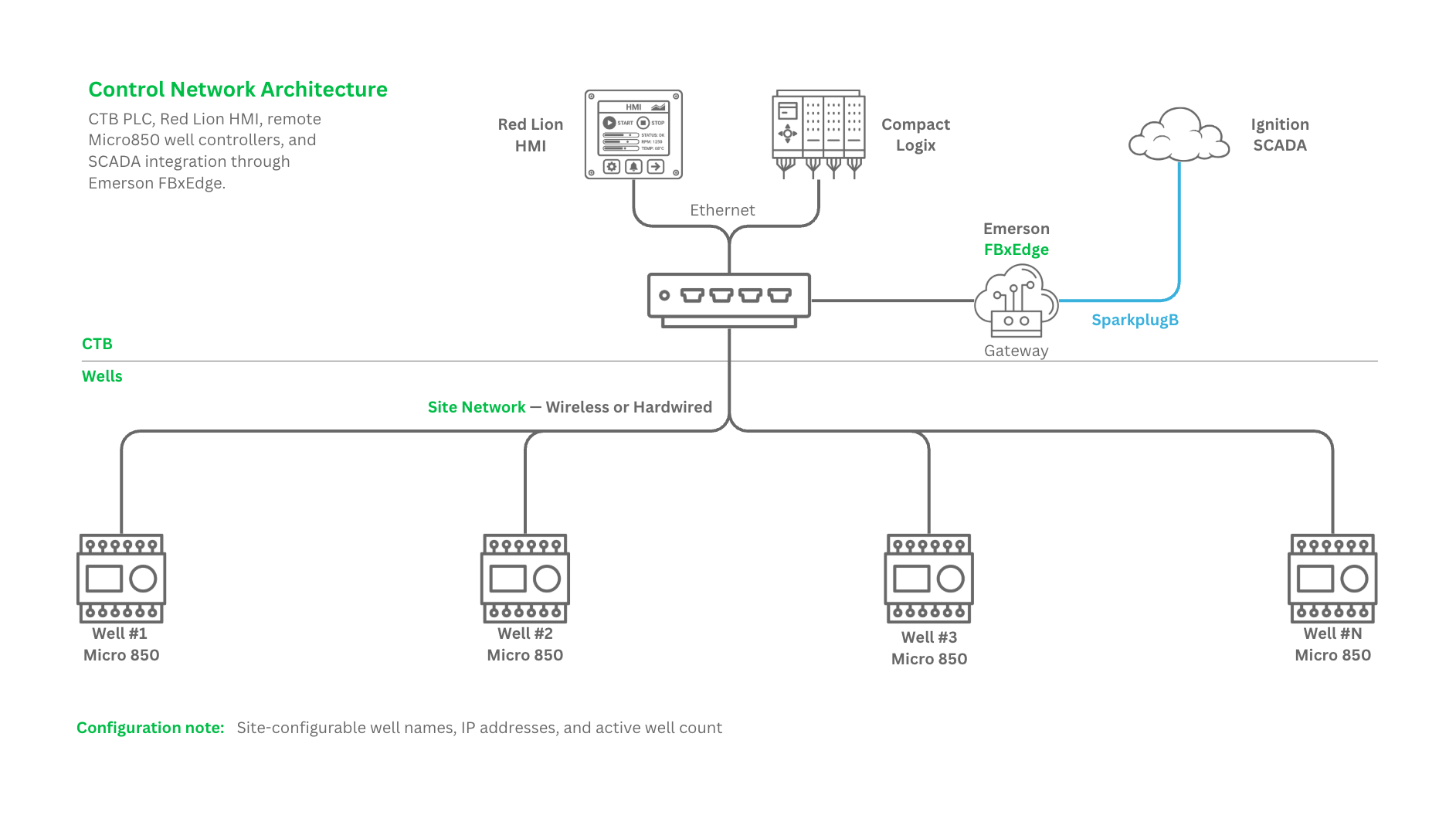 Scalability and Site Replication
One of the main design requirements was that the system needed to be reused across several sites. Each site could have a different number of wells, different well names, different IP addresses, and different communication paths.
Because of that, the system was designed around configurable well data instead of hardcoded logic for one specific site.
The same base architecture could support smaller locations or larger sites with up to 30 wells. Well names, controller addresses, active well count, and communication details could be adjusted per deployment.
This made the system easier to replicate, maintain, and troubleshoot.
HMI Development
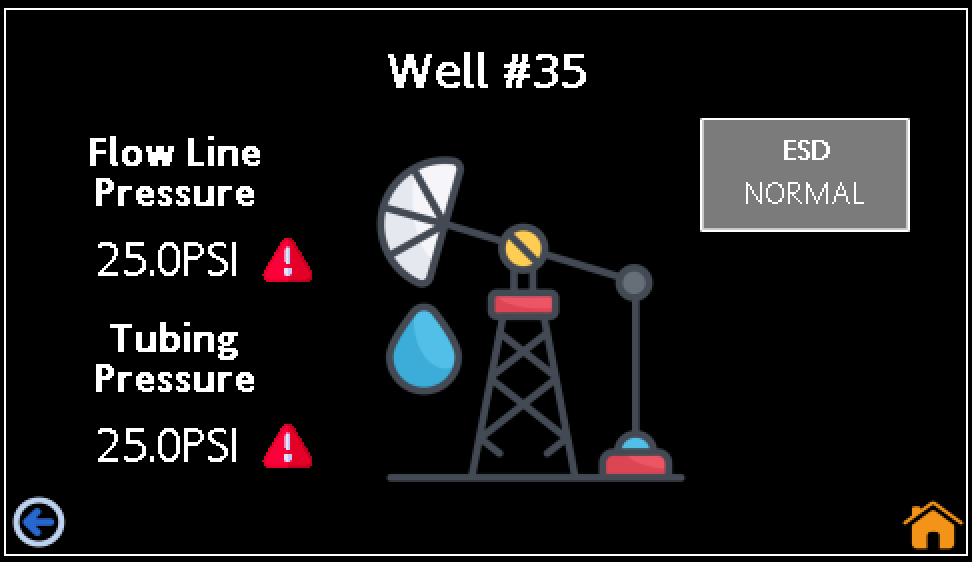
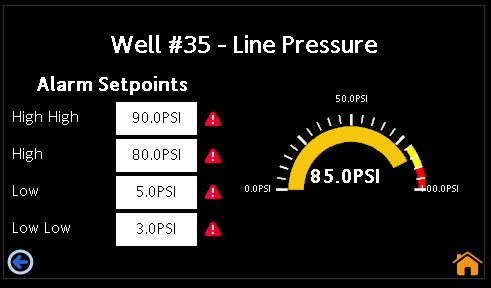 I developed the HMI screens to give operators a clear view of the CTB and well status without overloading the interface.
The CTB screen focused on tank level visibility, water/oil system status, and alarms. This allowed the operator to quickly understand whether the site-level conditions were normal or approaching a shutdown condition.
The well overview screen gave operators a simple view of each well, including flow line pressure, tubing pressure, and ESD status. The goal was to make abnormal conditions visible immediately.
The pressure detail screen provided additional visibility into pressure setpoints, alarm thresholds, and live pressure values. This helped operators and technicians understand why a pressure alarm or shutdown condition was active.
My Role
My role included control system development, HMI design, PLC logic implementation, and coordination with the IT/OT team for SCADA data delivery.
I worked on the shutdown logic, well monitoring structure, operator interface, alarm/status visibility, and the data path from the control system to Ignition SCADA through Emerson FBxEdge.
The project required coordination between field instrumentation, PLC control, HMI operation, remote well communication, and SCADA integration.
Technical Scope
Technologies and systems used in this project included:
Rockwell CompactLogix, Rockwell Micro850, Studio 5000, Connected Components Workbench, Red Lion HMI, Emerson FBxEdge, Ignition SCADA, SparkplugB, Modbus RTU, 4–20 mA instrumentation, wireless/hardwired site communication, ESD logic, tank level monitoring, pressure monitoring, and distributed well control.
Result
The final system provided a reusable distributed shutdown architecture for oilfield sites with multiple wells.
It allowed the CTB to coordinate site-wide shutdowns, allowed each well to protect itself based on local pressure conditions, gave operators clear HMI visibility, and delivered operational data to the company SCADA system.
The main value of the project was not only the shutdown logic itself, but the ability to replicate the architecture across different sites with configurable well names, IP addresses, communication paths, and active well count.
Oscar Calix
Sr, Control System Engineer
Cloud computing for OT, industrial data pipelines, SCADA supervision, full-stack tools for automation workflows..